

Wall Street is adjusting its expectations for Adobe after the software giant delivered a mixed earnings report that raised more questions than it answered about the company’s near-term growth trajectory.
Citi analyst Tyler Radke lowered his price target on Adobe (ADBE) to $228 from $264, while keeping a neutral rating on the stock, according to a report from The Fly.
While Radke described the quarterly numbers as “relatively solid,” he flagged “more signs of disruption” ahead, noting an implied $500 million cut to Adobe’s fiscal 2026 organic annual recurring revenue (ARR) outlook.
The analyst cut his estimates following the earnings print.
Adobe reported strong numbers in Q2
Adobe posted record revenue of $6.62 billion for its fiscal second quarter, up 13% year over year on a reported basis and 11% in constant currency.
Diluted earnings per share came in at $4.25 on a GAAP basis and $5.96 on a non-GAAP basis. Non-GAAP earnings per share grew 18% year over year.
On the surface, those are solid numbers.
Total ARR hit $27.1 billion, growing 12.5% year over year, while remaining performance obligations (RPO) hit $22.27 billion, also up 13% year over year.
Related: Goldman Sachs resets Apple stock forecast after WWDC
But the more important story was in what Adobe chose to say about the rest of the year.
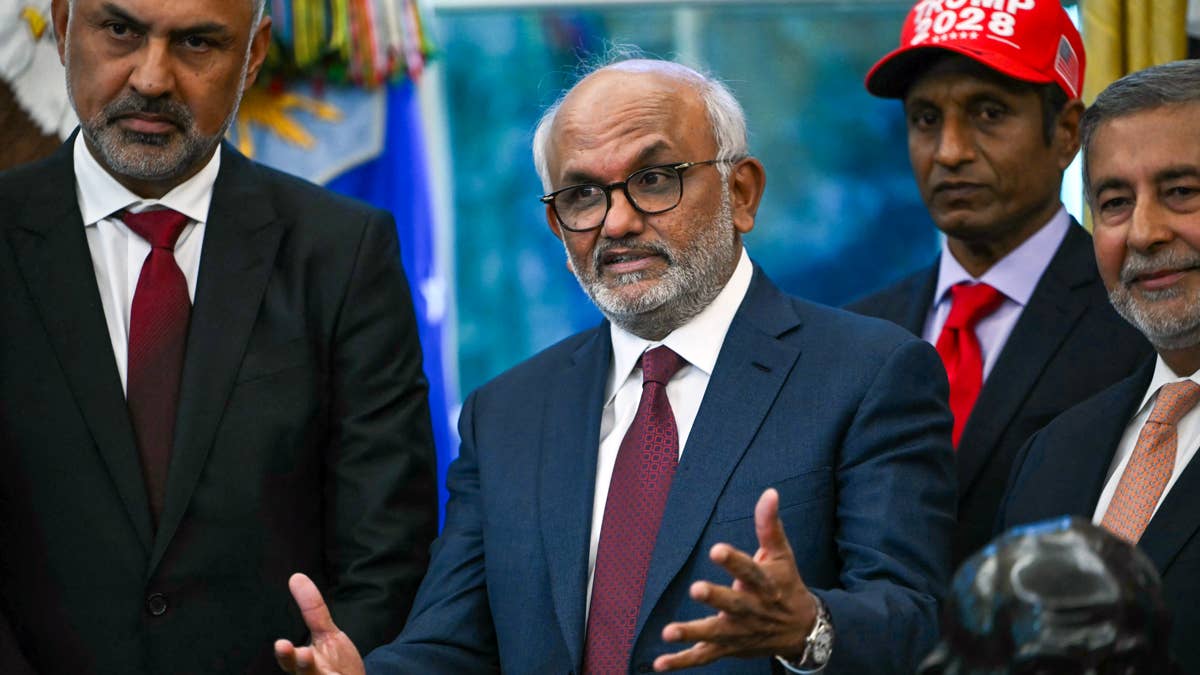
Adobe CEO Shantanu Narayen told investors the company is making a deliberate strategic pivot toward freemium user acquisition, prioritizing monthly active users over near-term ARR growth.
The company also said it is deferring previously planned price increases for its Creative Cloud lineup.
“The strategic shift to acquire more freemium customers through Adobe and Firefly lowers our second-half ARR growth expectations from individual subscribers,” Narayen said on the call.
Adobe now targets total fiscal 2026 revenue of $26.5 billion to $26.6 billion and non-GAAP earnings per share of $24.35 to $24.45, both raised from prior guidance, partly thanks to the April acquisition of Semrush, which added $480 million in ARR.
CABALLERO-REYNOLDS/AFP via Getty Images
Why the ARR revision worries Adobe stock analysts
The ARR shortfall is at the heart of Citi’s concerns.
- Adobe is betting that giving users a friction-free, no-paywall introduction to its tools, including Firefly, Express, and Acrobat AI Assistant, will build a bigger long-term customer base.
- The theory is that users who engage with the product first, before being asked to pay, eventually convert at higher rates and spend more over their lifetime.
- It is the same playbook that made Adobe Reader one of the most widely used software products in history.
Narayen explained the math this way: Roughly half of the ARR hit comes from deferring Creative Cloud price optimizations, and the other half comes from routing more users to freemium experiences instead of direct-to-pay flows.
Adobe President of Creativity and Productivity Business David Wadhwani pointed to hard data behind the shift. Traffic to adobe.com grew more than 40% year over year.
Creative freemium monthly active users grew from 50 million to 90 million in the past year. Firefly ARR grew approximately 50% quarter over quarter.
Acrobat AI Assistant paid monthly active users grew over 150% year over year.
“All of those early indicators are there,” Wadhwani said. “Really what we’re working to do as we bring more of that traffic over is that, that just needs time to play out.”
What this means for ADBE stock investors
The pivot makes strategic sense on paper. Adobe is trying to do with Firefly and Express what it did with Reader. it aims to get hundreds of millions of people using the product for free, then monetize them over time through premium tiers, credit packs, and enterprise offerings.
Firefly’s ending ARR across Firefly apps, credit plans, and enterprise offerings is approaching $300 million as of the end of the second quarter.
More Tech Stocks:
- Morgan Stanley sets jaw-dropping Micron price target after event
- Nvidia’s China chip problem isn’t what most investors think
- Quantum Computing makes $110 million move nobody saw coming
AI-first ARR across the company grew 3x year over year to over $500 million.
The challenge for investors is the timing.
Adobe is asking the market to accept slower ARR growth now in exchange for a bigger user base later.
That is a trade-off Citi is not yet willing to price optimistically, which explains the lower target.
Adobe confirmed that CFO Dan Durn has resigned to pursue an opportunity outside the software industry. Steve Day, a 20-year Adobe veteran, will serve as interim CFO.
For investors, the near-term picture carries more uncertainty than usual.
Adobe remains one of the most dominant platforms in creative software and digital marketing, but its willingness to trade short-term revenue for long-term scale is a bet that will take several quarters to validate.
Related: Mizuho resets Adobe stock price target for the rest of 2026